

What is Muscle Tone, Hypotonia and Hypertonia

Muscle Tone
Muscle tone is the state of some degree of permanent contraction of the muscles at rest, which keeps the muscular system in readiness for any activity to be possible. Muscle tone decreases during sleep and disappears completely after death.
Ο normal muscle tone is the basis for normal posture and movement of the body. Thanks to muscle tone we are able to conquer the required kinetic milestones for our evolution and to accomplish complex activities.
Hypotonia
Η hypotonia is the situation where the muscle tone is lower than normal. In this case, the passive movement of the body parts occurs without the presence of resistance.
The muscles are more relaxed and weaker so that they cannot fully perform to execute motor patterns. The readiness of the muscles is insufficient and therefore they are slow to react.
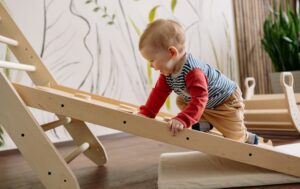
At the same time, the child with hypotonia lacks the intention to move and therefore delays his/her motor development. For example, the child is characterised by difficulty sitting down, does not get up easily, prefers to lie down and does not move around enough to explore and play.ι.
Difficulty controlling the body can lead to frustration and strong reactions to the the child's behaviour.
Hypertonia
Η hypertonia is the situation where the muscle tone is higher than normal. In hypertonia, there is increased resistance to passive movement of the body parts.
The muscles appear stiffer and make it more difficult to successfully perform a movement. Their hyperexcitability does not mean that they are stronger, as the difficulty it creates inhibits the execution of movements, so that the muscles are not activated as much as they should be and therefore do not get stronger.
That is, in trying to catch a toy, a child with hypertonia may not execute the movement perfectly and may not be able to reach the toy or open his/her palm too much to catch it because of the resistance he/she encounters from his/her muscles.
Symptoms and Causes
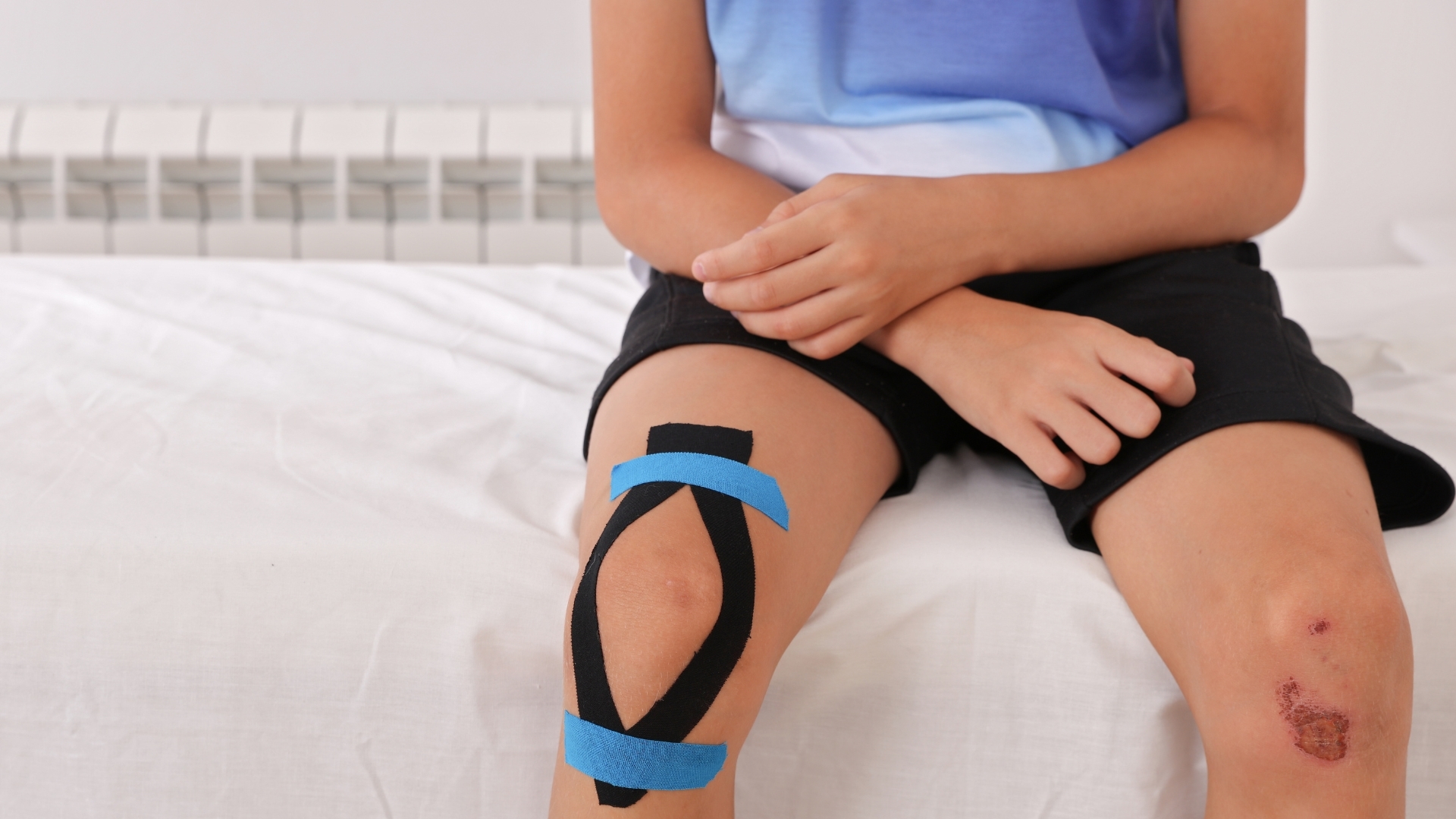
Muscle tone disorders are usually the result of damage to the central nervous system (brain and spinal cord) or a disorder of the muscles themselves, or may co-exist as symptoms in some syndromes.
They may co-exist as symptoms in some syndromes or neurodevelopmental disorders, such as in autism.
Common disorders that muscle tone disorders are found are cerebral palsy, cerebrovascular accidents, spina bifida, spinal muscular atrophy, Down's syndrome, Angelman syndrome and myopathies.
Read more about common neurological disorders by clicking on the link.
Hypotonia
Η hypotonia is characterized by loose muscles and super flexibility of the joints with increased range of motion.
Low muscle excitability is not associated with the muscle weakness, but which is caused by the of altered motor activity of the child.
Therefore, hypotonia is associated with delayed motor development, more often in children who were born prematurely , reduced balancing and protective reactions, low muscle readiness, high base of support in the upright position, reduced muscular endurance and muscle strength.
There is also a lack of body awareness and difficulties in fine motor skills and coordination of movements. This means that a child with hypotonia will be delayed in sitting, crawling, standing up and walking, and is more at risk of injury due to the absence of protective reactions. He is also not motivated to play because he has difficulty controlling his body. Difficulties in body awareness and coordination are often related to issues sensory processing.
Hypertonia
The overtone is characterized by stiff muscless, limited joint range of motion and increased tendon reflexes. Muscle stiffness may also result in pain during stretching due to changes in muscle fibre contraction.
In addition, the balancing and protective reactions are usually absent or quite reduced due to the inability of the muscles to react directly. Motor development is delayed, motor patterns appear in an abnormal manner of execution, eventually affecting not only gross and fine movement but also fine movement and coordination of movements.
Relationship with spasticity
In hypertonia we find 2 main categories, the spasticity and the dystonia. In the former, there is increased resistance to sudden passive movement of the upper or lower limbs of the body which then decreases, while in the latter resistance to passive movement is continuous and does not decrease at all.
Spasticity
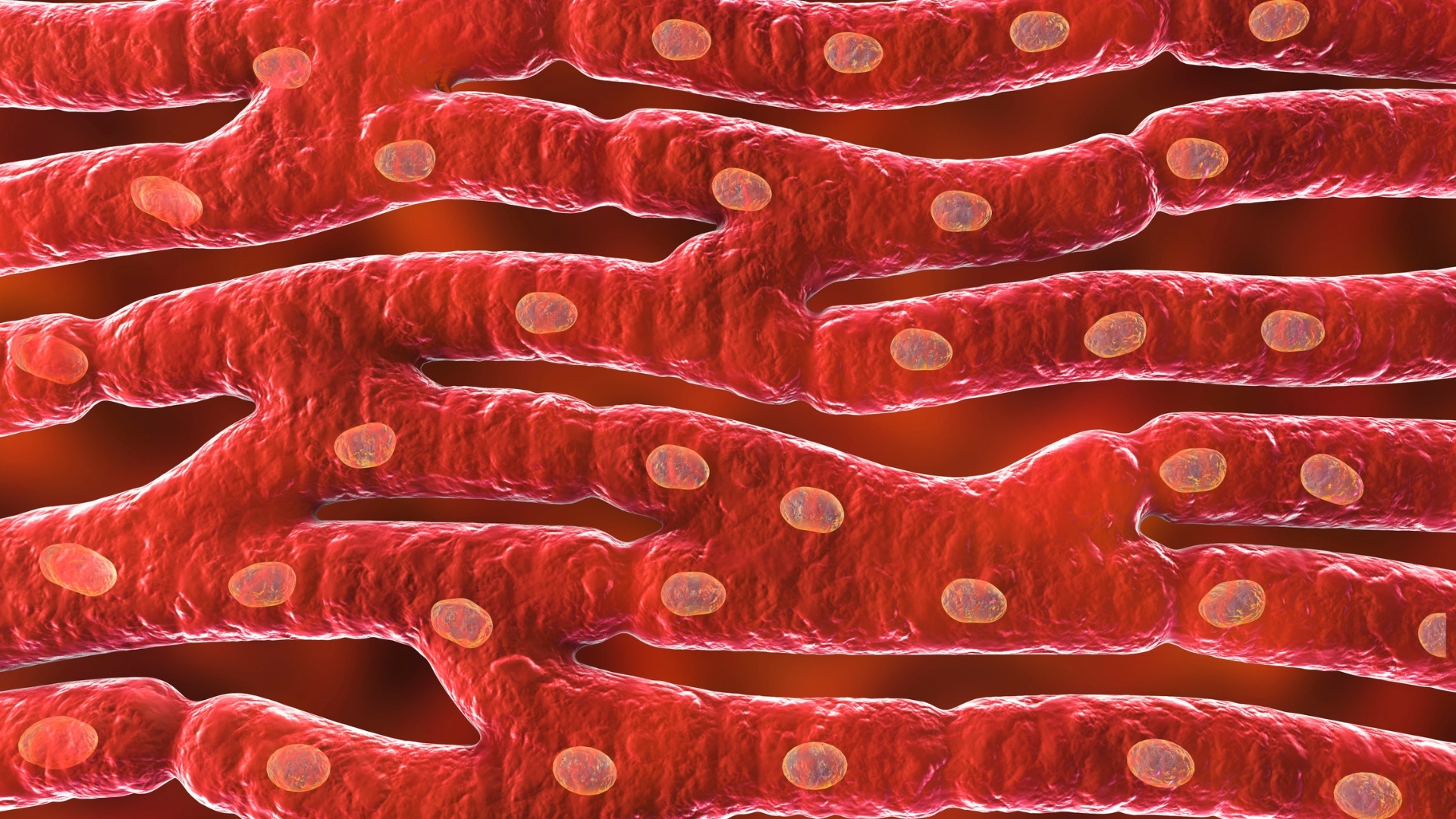
Η spasticity is a category of hypertonia in which the main characteristic is increased resistance to sudden passive movement of a body part that then subsides.
Spasticity is usually found in children with cerebral palsy or after head injuries and in vascular strokes.
Along with spasticity there are usually increased tendon reflexes, abnormal reflexes, clonic spasms and delay in the development of a child's motor development.
A characteristic of spasticity is that it affects specific muscle groups. In the upper limbs, it affects the cranks (the muscles that help to grip something or bring something close to you) and in the lower limbs, the extending (the muscles that help kick a ball), i.e. those that act against gravity by supporting the body.
Also, because of this muscle tone disorder, movement patterns are performed in an abnormal way resulting in movements be clumsy, uncoordinated and often unsuccessful in completing them.
The child with spastic muscles has difficulty controlling its centre of gravity so will be late to sit and walkedi, he has difficulty separating the upper and lower part of his body so will be late to crawl and stand up.
It will also be difficult to play due to the inability to make the appropriate movements as the muscles do not fully obey the child's will.
Address
In the management of spasticity and the promotion of a child's motor development, individualised physiotherapy programmes from specialised paediatric physiotherapists as well as aids that prevent abnormal positions of the limbs due to increased muscle tone, such as splints, braces and orthoses.
On exercises that help to manage spasticity include stretching to reduce stiffness, upper and lower limb strengthening exercises and target-specific exercises (e.g. catching a toy). In this way we aim to train the brain of the correct motor patterns it should reproduce.
The aim of physiotherapy is to train the child to improve his/her movement patterns, prevent any complications and shortness, strengthen and improve his/her strength and balance, all of which is ultimately aimed at achieving functional independence.
How to Deal with the Situations

Η physiotherapy and the construction site play a key role in the treatment of muscle tone disorders using appropriate and personalized exercises for each child, providing valuable advice to parents to better manage their child's needs at home and thus enhance the therapeutic effect.
Treatment of hypotonia
- Strengthening exercises to increase muscle strength and power
- Activities that improve balance
- Ground game with encouragement to move
- Correct seating position in a high chair
- Suitable handles for lifting and moving the child to avoid dislocations
Treatment of hypertonia
- Stretching to improve muscle elasticity and prevent muscle contractures
- Relaxation exercises
- Strengthening exercises to increase muscle strength and power
- Activities that improve balance
- Ensuring correct body positioning
- Use of appropriate aids to intercept pathological patterns
- Reduction of stimuli that stimulate spasticity (e.g. cold and loud noises)
- Facilitate physiological movement patterns and integrate them into daily life
- Botulinum toxin injection into spastic muscles to relax them (Botox)
- Surgical interventions (neurological-orthopaedic)
Tips for Parents and Carers

Parents can help children with muscle tone disorders by recognising symptoms early and encouraging physical activity.
Indications for the existence of muscle tone disorders:
- Notice if the child has difficulty moving his or her arms or legs
- Increased range of motion in the joints
- Delay or absence of specific developmental motor skills such as rolling, crawling, standing
- Poor posture with hunching over and/or constant movement to find their balance
- Difficulties in balance
- Sitting in a w position on the floor (due to torso weakness)
- Clumsiness like stumbling
- Difficulty of transitions and need for support
- Difficulty with fine movements such as writing
Early identification and proper intervention can significantly improve a child's motor development and quality of life, as highlighted in related studies.
Tips
- Create a supportive environment with appropriate games and activities
- Work with experts to personalised interventions
- Careful way of lifting and rolling
- When feeding the head should be in the middle line
- We use the prone position a lot to promote head elevation, trunk extension and arm support
- Encourage the infant to play with his paws and feet to strengthen the abdominal muscles and improve body awareness
- We bring his hands in front of him to see them, process them and bring them to his mouth to help him perceive his body
Conclusion
It is extremely important to identify early difficulties in relation to all of a child's neurological and developmental deficits. The younger the age of the child, the better the results of early intervention of treatment will be. At the same time, expert advice to parents for younger children is valuable.
The special treatments physiotherapy and occupational therapy are specialized treatments that aim, among other things, to improve muscle tone disorders. They are the only therapies that effectively contribute to the normalization of muscle tone and thus to the proper functioning of the body parts.
Children who have severe muscle tone disorders usually need ongoing support if early detection of muscle tone disorders is made correct diagnoses to which we referred earlier.
Both the assessment of muscle tone and its correct treatment when it is disturbed, determines the child's motor development.