

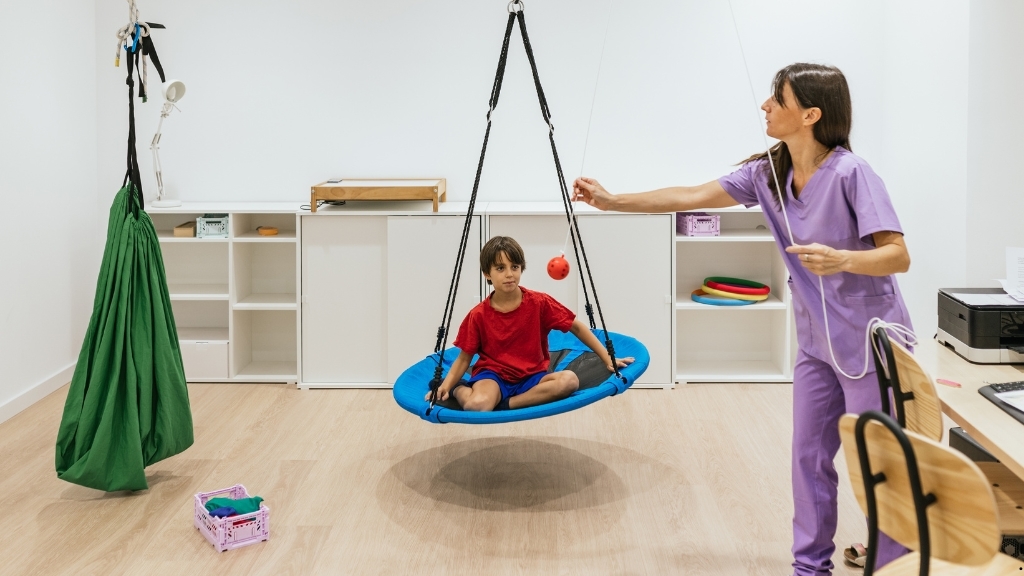
What is the Sensory Diet
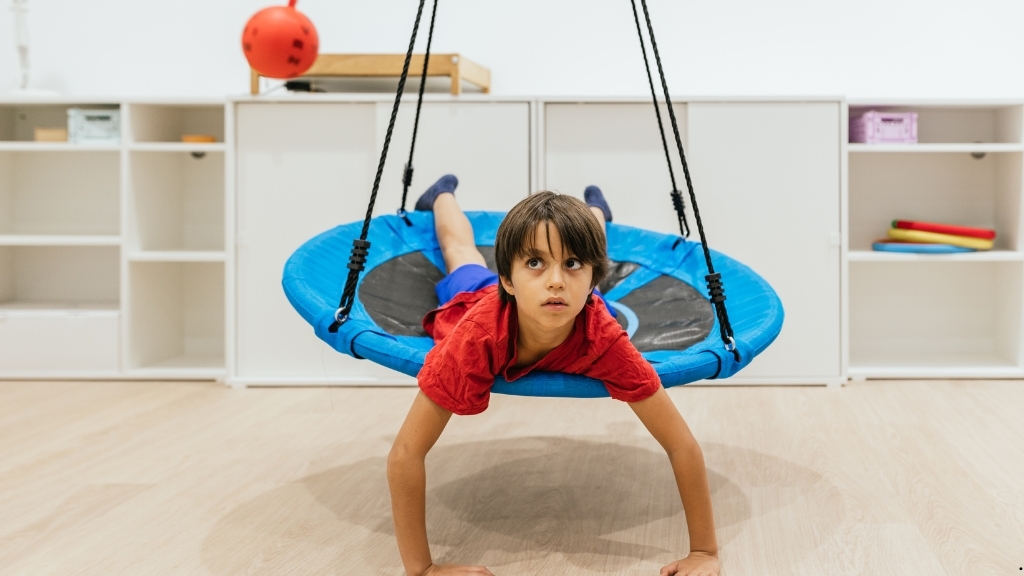
Despite its name, the Sensory Diet is not related to diet, but to a dietary approach to nutrition. personalised programme of activities, which aims to regulate the child's sensory needs. It is defined as a diet because the activities given have a specific duration, goal and time in the day to be performed.
The occupational therapist creates a plan that includes activities for daily routines at home, school or at play, so that the child can respond more calmly and effectively to the demands of his or her environment.
For example, a child who is a strong seeker of movement may benefit from activities such as trampolining or swinging before sitting down to read. Similarly, a child who is easily disturbed by sounds or touch can be helped through relaxation or deep pressure techniques.
When a child may need sensory intervention
Every child has a different way of perceiving the world. However, when their reactions are exaggerated or restrictive, there may be a risk of overreactions. dysregulation, discrimination, or dyspraxia. Some indicative signs that need to be investigated are the following:
- Hypersensitivity to sounds, lights or touch (e.g. covers ears to noises, flicks switches, does not accept touch).
- Difficulty concentrating, hyperactivity or passivity (e.g. cannot complete an activity without getting up from his/her seat or stopping, constantly moving around or not exploring the environment at all and sitting in any position you give him/her).
- Avoidance of certain textures or foods (e.g., rejection of entire food groups, selectivity about the colour, type, shape, smell or texture of food).
- Frequent outbursts of anger or intense anxiety (e.g., unnecessary yelling, crying, difficulty postponing desire), behaviors often associated with child aggression and need careful investigation.
- Balance problems, clumsiness or difficulty in coordinating movements (stumbles or bumps into objects, cannot get dressed/dressed, cut with scissors, limp, etc.).
If you notice any of the above signs, the early and correct diagnosis by a specialised multidisciplinary team is crucial for supporting the child.
It is important to note that sensory difficulties often occur in children with ADF (Autism Spectrum Disorder) or ADHD (Attention Deficit Hyperactivity Disorder), but also in children without a diagnosis, such as children who are born prematurely and have particularities in sensory processing, as discussed in the article Premature babies: development, care and survival.
How the Sensory Diet works in practice
The sensory diet is designed exclusively for the needs of each child. It includes a wide range of activities that help the child to “wake up” or “calm down” his/her nervous system, depending on the situation.
Indicative examples:
- Movement and balance: swinging (from a swing, pilates cloths, etc.), walking on a line, playing with balls.
- Tactile activities: play with plasticine, water, sand, textures (of different kinds).
- Deep pressure activities: hugs, weight blankets, “tight” pillows.
- Sensory exploration: we use different scents, lights, sounds, music depending on the needs of each child.
The systematic application of these activities helps the child to improve attention, self-regulation and behaviour. In many cases, the physiotherapy is applied as a complementary treatment, especially if there is a muscle tone disorder, supporting motor development and the correct posture and function of the body.
The role of the Occupational Therapist
Ο occupational therapist is the specialist who assesses the child's sensory profile through observation and specific assessment tools. Based on the findings, he or she designs a personalized treatment program in the home based on the principles of sensory integration and, in addition, provides parents with a sensory diet that fits the child's needs and routines. In addition, it trains parents and teachers on how to properly implement activities, ensuring consistency and effectiveness, in conjunction with interventions that enhance the child-adult relationship, such as intensive interaction.
What benefits the child gains from Sensory Integration
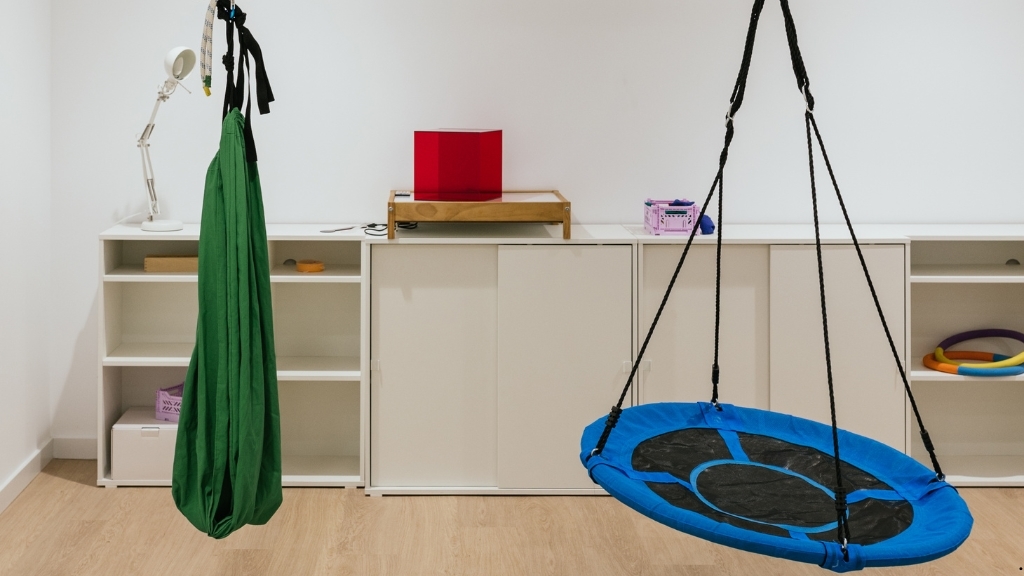
The systematic implementation of sensory integration programmes can bring significant changes in the child's daily life. Through targeted activities and guidance from a qualified occupational therapist, the child is trained to use his or her body in a way that better regulates behaviour and his feelings.
The most common benefits observed are:
1. Better concentration and school performance
The child can focus more easily, organise his/her thinking and actively participate in learning activities.
2. Reducing anxiety and anger outbursts
Better regulation of the nervous system helps the child to manage his or her emotions and respond more calmly to changes or challenges.
3. Developing self-control and emotional stability
Through repeated sensory experience, the child becomes more self-aware and better self-regulated.
4. Strengthening motor coordination and self-confidence
As motor skills improve, the child gains confidence in everyday activities and in playing with peers.
5. Better social interaction and cooperation
The ability to regulate behaviour and reactions enhances social integration, cooperation with other children and a sense of acceptance.
Sensory integration not only changes the child's behaviour, but also changes the child's improves the overall quality of life creating a more balanced and functional child in all areas of daily life.
The earlier the appropriate support starts, the greater the benefits for the child and the family. Η early intervention utilizes the plasticity of the brain and substantially enhances the child's developmental path.