
Motor Development: the Basics
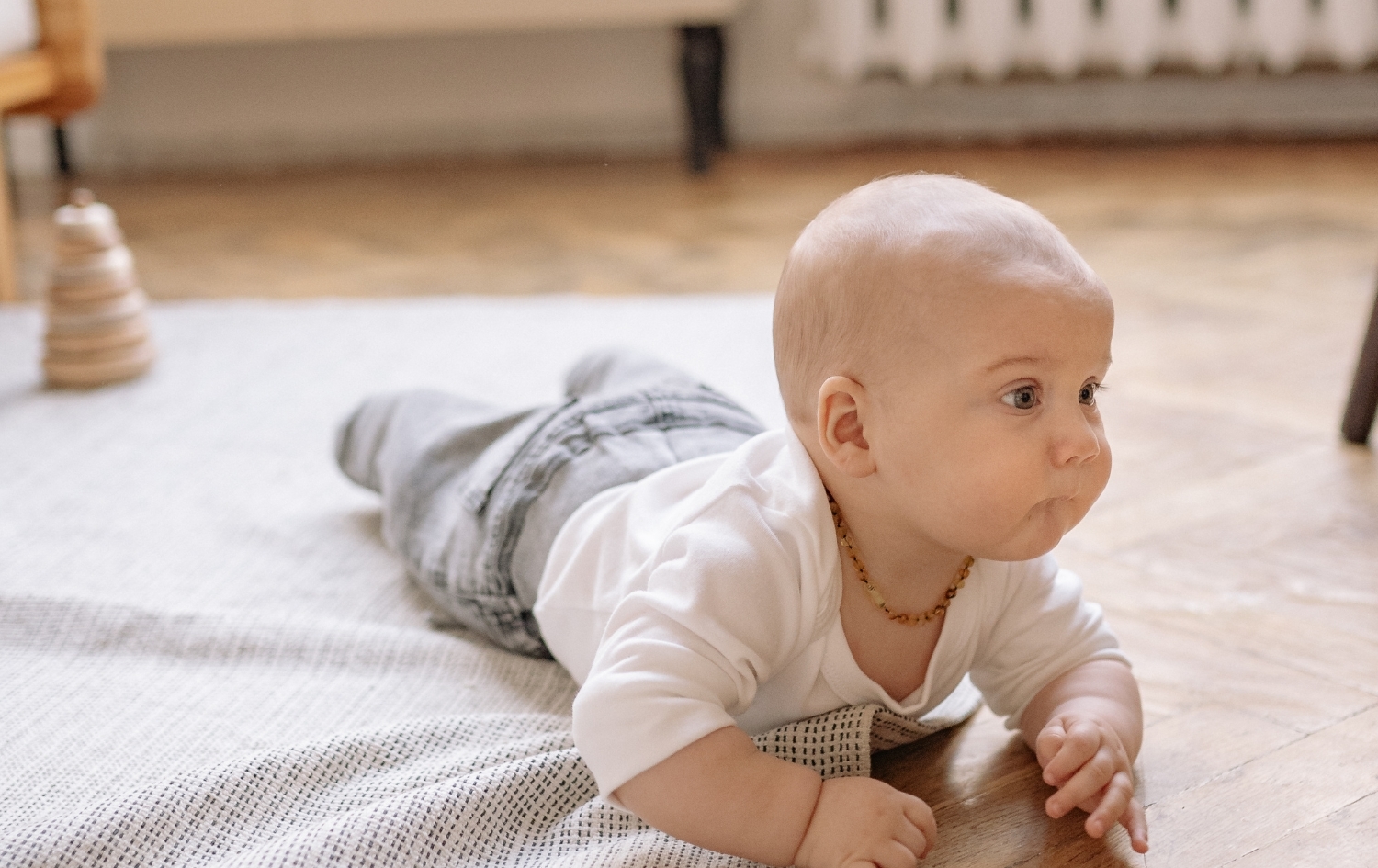
Motor development refers to the development of the baby's ability to control his or her body and movements. It includes two main areas: gross motor skills, which involves movements such as rolling, sitting and walking, and fine mobility (fine motor skills), associated with smaller movements of the hands and fingers, such as grasping objects, handling toys and later using tools.
The development of motor skills follows a specific sequential path. The baby first gains control of the head, then control of the trunk and later control of all the limbs. This process is guided by the maturation of the nervous system, which allows for better coordination, balance and muscle strength.
Everyday experience, movement on the floor and free exploration contribute significantly to development. At this point, it is important to remember that every baby grows at its own pace. Some children walk earlier, while others spend more time exploring by crawling or playing on the ground, but this is not a sign of delay.
Cognitive Development: the Basics
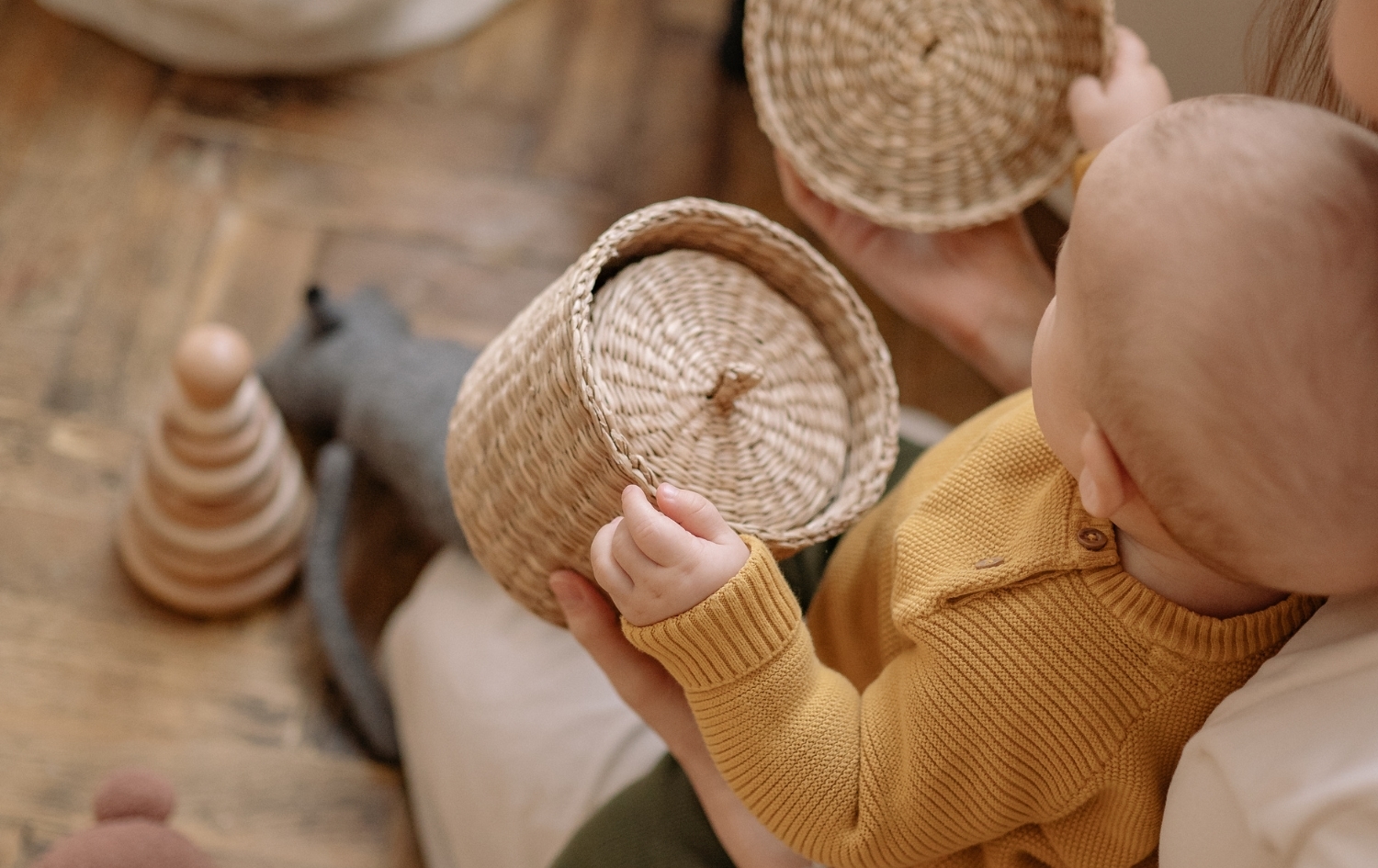
Cognitive development, on the other hand, is about how the baby thinks, learns, remembers and understands the world. From birth, infants gather information through their senses, in particular, sight, hearing, touch, taste and smell. In this way they gradually build up connections in the brain that support learning.
Through everyday experiences, the baby begins to understand cause-and-effect relationships. For example, he understands that when he moves a toy, a sound is heard or when he cries, the parent appears. These simple experiences form the basis of problem solving and early thinking.
Memory and the ability to recognise faces, objects and routines of everyday life gradually develops. The baby starts to remember familiar voices, expressions and situations, which enhances the sense of security. The sensory activities, the interaction with parents, the game and the verbal communication significantly enhance cognitive development, laying the foundations for language, social interaction and future learning.
Development Milestones: 0-3 Months
Kinetic Development
During the first three months of life, the baby's movements are mainly reflexive. There are automatic reactions such as the grasp reflex, the Moro reflex or the flicker to a loud sound. Gradually, the infant begins to gain better control of the head, especially when lying on its face, lifting it for a few seconds. This position strengthens the muscles of the neck, shoulders and back.
The eyes move in a more coordinated way and the baby begins to focus on faces or bright objects at a short distance. The arms and legs move strongly, although without full coordination, and often bring the hands close to the face or mouth. The body gradually becomes more symmetrical and sudden, uncoordinated movements decrease.
Frequent changes of position, contact with different surfaces and safe movement on the floor help the baby to develop body awareness and basic muscle control.
Cognitive Development
At this age, the baby reacts to sounds and often calms down when hearing familiar voices. He begins to follow objects with his eyes and shows particular interest in human faces, especially expressions and mouth movements.
Parental recognition starts early, as the infant responds to touch, voice and proximity. It may calm down when picked up, observe the caregiver's face carefully, or display the first social smiles. Through the senses, he is constantly gathering information, learning to distinguish sounds, light, movements and rhythms of everyday life.
Repeated interaction, parental talk and eye contact are important in establishing the first neural connections that support future learning, communication and emotional development.
Development Milestones: 3-6 Months
Kinetic Development
From the third to sixth month, the baby gains significantly better control of the head and trunk. It can turn on its side or from prone to supine, and begins to rest more firmly on its elbows when lying on its stomach. Many babies begin to sit with support and lift the body using their arms, building muscle strength and coordination.
At this stage, hands become a key exploration tool. The baby observes his hands and feet, touches them and tries to grasp objects that are close to him. The grasp becomes more coordinated and he begins to transfer toys from one hand to another, bring them to his mouth and experiment with different ways of handling them.
Cognitive Development
Social smiles and laughter occur more often, making it a more common important signs of social connection. The baby recognises familiar faces and reacts differently to familiar and unfamiliar people. He plays with his voice, making sounds, vocalizations and actively «talking» with parents.
At the same time, he begins to understand the concept of cause and effect, repeating movements that cause an interesting result, such as dropping a toy to pick it up again. He expresses feelings of joy, excitement or displeasure and actively seeks interaction, while his attention is sustained longer and is directed towards faces, sounds and strong visual stimuli.
Development Milestones: 6-9 Months
Kinetic Development
During this time, many babies sit unsupported and can maintain their balance for quite some time, using their hands for play and exploration. Tipping and rolling become more common, and many infants try to move by dragging their bodies forward or backward.
The baby rests on the hands and knees, preparing the body for more complex forms of movement, such as crawling. Strengthening the muscles, torso and limbs helps to improve stability and postural control. The grip becomes more functional, allowing better exploration of objects: bumping them together, moving them, throwing them and observing them when they fall.
At the same time, the baby begins to transfer his weight from one side of the body to the other, rotate while sitting and try to reach toys that are a little further away, reinforcing motor planning.
Cognitive Development
At this age, understanding of games such as «ku-ku-cha», which reinforce the concept of presence and absence, appears. The baby begins to look for objects that are hidden, showing that he understands that they continue to exist even when he cannot see them.
Expresses clear preferences in toys, activities or people and imitates sounds, movements and facial expressions. He carefully observes the parents' reactions and tries to repeat behaviours that elicit a positive response.
Emotional development becomes more intense, and fear of strangers or separation anxiety may occur. The baby uses vocalizations, gestures and expressions to communicate needs and desires, showing an increasing intention to interact socially.
Development Milestones: 9-12 Months
Kinetic Development
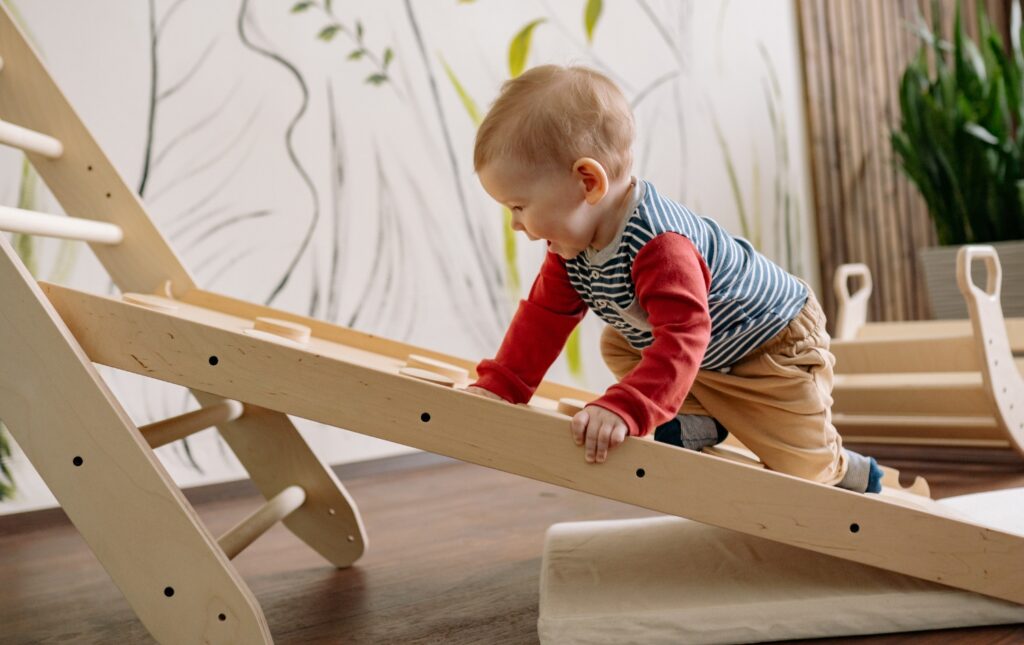
From the ninth to the twelfth month, the baby is actively moving through crawling or other modes of movement, such as crawling or moving in a sitting position. Many children are pulled off furniture to stand upright and begin to walk with support, a process known as «sideways walking.» Balance gradually improves and the baby experiments with letting go of the support momentarily.
Fine motor skills are developing significantly. The baby uses the two-finger grip to grasp small objects, which allows more precise handling. He can put and take objects in and out of containers, point with his finger and try to use everyday objects by imitating adults. Some babies take their first independent steps, although the range of normal appearance is wide.
Cognitive Development
The infant begins to understand simple words and instructions, such as his or her name or the word «no», while responding to familiar routines in everyday life. He or she can move to the rhythm of music and participate in simple interaction games such as clapping or «hello».
The understanding of the permanent existence of objects becomes more complete. The baby actively seeks out hidden objects, points to things that interest him or her and uses gestures, sounds or the first syllables to communicate needs, desires and feelings.
Signs of Normal Development & Concern
What is considered normal
We would say that the development of babies varies greatly. Developmental milestones are indicative guides and not strict time limits. Each child has a unique rate and style of development, influenced by genetic, environmental and emotional factors.
Some babies are more mobile, while others spend more time observing and cognitively exploring. Individual differences are a normal part of development, and small delays in one area may be accompanied by faster progress in another. The quality of interaction with parents, the environment and opportunities for play also have a significant impact on the developmental trajectory.
When to worry
Parents are advised to consult a specialist when they notice complete lack of interest in the environment, absence of reaction to sounds or movement, persistent repetitive movements or lack of eye contact.
In addition, difficulties in feeding, chewing, severe muscle laxity or excessive stiffness, as well as general passivity or limited interaction with caregivers, may be signs that need Evaluation. Early observation does not necessarily mean a problem, but allows for proactive support, guidance for parents and, if necessary, early intervention, which significantly enhances the child's development.
Tips for Parents: Encouraging Growth
For Motor Development
The tummy time, which is the time the baby spends lying on his or her stomach under supervision, strengthens the muscles of the neck, shoulders and torso, preparing the body for future stages such as sitting and crawling. Free play without excessive restrictions helps the child try out movements, develop balance and gain confidence in motor skills.
Placing accessible toys in a safe environment encourages exploration, movement effort and hand-eye coordination. Avoid excessive use of seats or aids that restrict free movement.
For Cognitive Development
Talking to your baby every day, even before he or she speaks, boosts language development. Reading books, playing games that produce sounds and naming objects help the child to make connections between words and experiences. Repetition of songs, rhythmic games and simple stories strengthens memory and attention.
Η quality contact, cuddling and shared playtime enhance learning and emotional security, essential for healthy development.
General advice
Follow the baby's interests, maintain a regular sleeping and eating routine and limit exposure to screens. Constant talking, eye contact and responding to the child's signals are among the most important developmental stimuli, while strengthening the secure parent-child bond.
When You Should Consult a Doctor
Regular monitoring of development through paediatric check-ups is essential to assess the baby's progress and record developmental milestones. Parents should report any specific concerns about the child's movement, communication, behaviour or responsiveness to the environment.
It is important to request an assessment when there is a significant delay in skills, asymmetry of movements or loss of previously acquired skills. Reduced social interaction, feeding difficulties or lack of eye contact are also grounds for investigation.
Η early intervention can effectively support development and prevent future difficulties. The paediatrician is a key ally of parents, guiding them, providing consulting and referring, where appropriate, to specialist child development professionals for comprehensive assessment and support.
Conclusion
The first year of life is full of important developmental steps that involve both movement and thinking. Motor and cognitive development progress together, through play, interaction and everyday experiences.
Every baby is unique and follows its own developmental path. Careful observation, support and the creation of a safe and stimulating environment help the child to develop his or her full potential.
Above all, parents are encouraged to enjoy this unique period of life, building strong bonds through love, play and constant presence!