

The professional or caregiver observes, imitates and responds to the person's behaviours, creating an environment of acceptance and communicative safety.
It is a flexible approach, tailored to the needs of each individual, which can be applied by speech and language therapists, special education teachers, psychologists and parents.
Its importance lies in the fact that it promotes social contact, emotional connection and improved quality of life for people with communication difficulties.
The method is designed to help people with severe social communication difficulties to develop basic interaction skills such as eye contact, joint attention and emotional responsiveness.
The philosophy of Intensive Interaction is based on the observation of the natural ways in which early forms of communication between infants and caregivers develop. The adult follows the rhythm, movements, sounds and expressions of the person, responding in a way that fosters connection and mutual participation.
There are no predetermined goals or strict instructions, but a flexible and personalised process that encourages spontaneous communication.
Unlike other interventions that focus on learning skills through teaching or reinforcement, Intensive Interaction approaches communication as a Relation and not as duties.
Its success is not measured by the number of words or actions, but by the quality of interaction and the degree of emotional connection. It is thus a meaningful and human approach that brings communication back to its basic dimension: the connection between two people.
At our centre the use of the method brings increasingly better results, especially for younger children in the programme early intervention.
Who it is aimed at
The people targeted by this method of outreach are not a homogeneous group that we can easily identify.
There are several terms that describe the people to whom Intensive Interaction is addressed: people who are in the pre-linguistic stage (i.e. without the ability to speak), people who are difficult to approach (who prefer to be away from all human contact), people with multiple, severe and all types of learning difficulties, people with autism spectrum disorders (especially those with delayed development).
What these people have in common is reduced communication and socialisation skills accompanied by learning, movement and behavioural difficulties.
A common characteristic of these people is the limited communication and socialisation skills, often accompanied by difficulties in learning, mobility and behavioural regulation.
Intensive Interaction offers these individuals a way to experience communication without pressure or demands, through emotional response and interaction.
Why it is important
It is important because it aims to enhancing social connection, attention and emotional safety, laying the foundations for further developing communication skills and trusting relationships.
Who applies it
The method can be applied by speech therapists, teachers, psychologists or carers and parents, both in therapeutic and educational contexts.
What is Intensive Interaction?

Intensive Interaction is a child-centred and experiential approach to communication developed in the 1980s by researchers and educators Dave Hewett and Melanie Nind in the UK.
It was based on the theories of developmental psychology. After observing infants, it was found that the development of communication is mainly achieved through spontaneous and repeated emotional interactions between mother and child (attachment theory “emotional attunement”, John Bowlby).
Thus, the Dave Hewett and Melanie Nind, they observed that the best basis for developing communication is the Relation. They were inspired by the way babies communicate with their parents - through looks, smiles, sounds and movements.
Η Intensive Interaction is a way of communicating that helps people with difficulties in contact and communication to connect with those around them.
How the approach works
In Intensive Interaction, the adult does not guide the child or ask the child to do anything specific. It follows the rhythm of, observes what he or she is doing and tries to participate in a simple and natural way - for example, by imitating a sound or movement.
Through this “back and forth” communication, the person begins to enjoy the contact and feel more comfortable with the people around them.
How it differs from other interventions
The difference between Intensive Interaction and other methods is that does not aim to teach skills, but to establish a relationship.
It is not based on rules or commands, but on acceptance and sharing of moments. It's a warm, human approach that reminds us that communication always starts with connection.
If you want to go deeper into the communication disorders in children, their forms and the therapeutic approaches that exist outside of ICU, see our detailed article: Communication Disorder in children: Understanding, Treatment, Therapeutic Support.
To Which People It Applies
Η Intensive Interaction is aimed at people who have difficulty communicating or connecting with others. It is an approach that can help people of all ages, with different kinds of difficulties.
Autism
Many people in the autism spectrum have difficulty expressing themselves or participating in social situations.
Intensive Interaction (EI) enables them to communicate in ways that are natural to them - through movements, looks, sounds and play. Over time, trust is built and the person begins to interact more comfortably. The logic of the method is based on the notion that we need to approach the person who is struggling first so that they can approach us in turn.
For example, we withdraw all objects in the room to avoid clinging to them and reinforce body-to-body, face-to-face contact with the child.
Mental disability
In people with intellectual disabilities, the method helps improve attention, social participation and emotional contact.
Its simplicity and flexibility make it suitable for every level of functionality. It is therefore more effective for people with cognitive deficits as it is personalised and follows the rhythm and abilities of each child.
Children without reason
For children who have not yet developed speech, Intensive Interaction offers a natural way of communicating without pressure. The child learns that he or she can «speak» and communicate with movements, looks or sounds, and be understood in this way. Adults with developmental disorders
The method was devised at its core mainly for the early developmental stages of the child in order to enhance the communicative motivation when it does not occur spontaneously.
However in some cases adults could be used to maintain communication skills when they find it difficult to participate socially. Through calm, repetitive interactions, they become more confident and enjoy communication again.
What skills are developed through Intensive Interaction
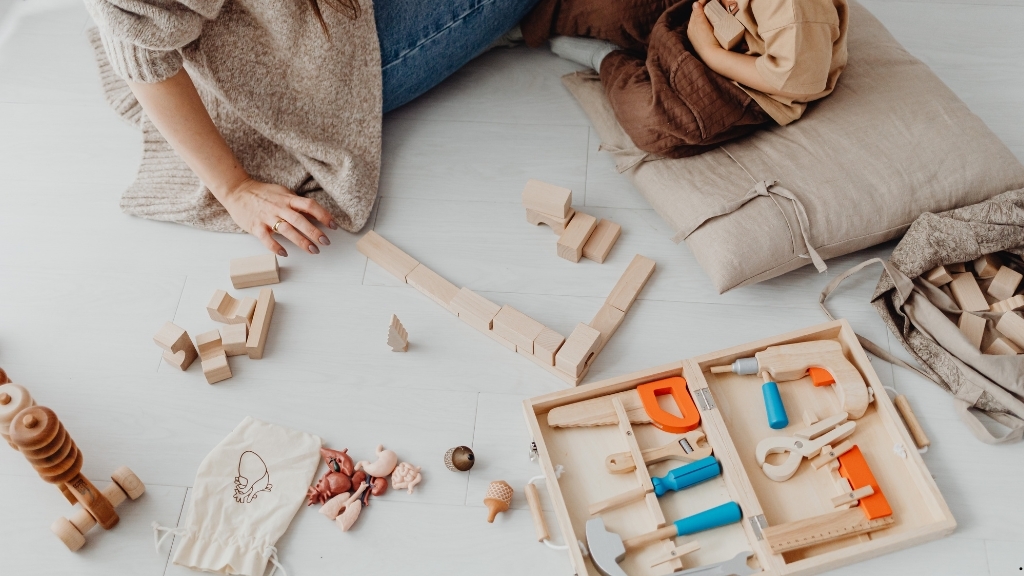
Η Intensive Interaction helps the person to develop basic but very important communication and social contact skills. It does not aim to teach the child to speak or carry out specific commands, but to help the child to enjoys contact with the other person and communicate in ways that are natural to him.
That is why it focuses on the interaction between two people and not on contact or use with objects.
- Eye contact
Contact with the gaze - the person begins to look the other person in the eye and recognise that communication happens through the gaze. - Attention and common focus - learns to watch what the other person is doing and participate in the activity.
- Exchange and reciprocity - through imitation and the code of communication, understands that relationships are based on cooperation.
- Expression of emotions - the person expresses joy, interest or excitement and is emotionally connected to the other person.
- Developing confidence and self-esteem - feels accepted as they are, without pressure or judgement.
All these skills form the basis for all forms of communication. When a person feels safe, accepted and happy in the interaction, then the way is opened to develop and the reason.
How it is applied in practice
Before applying the method, we take care of the appropriate configuration of the space each time.
We prefer quiet colours that reduce distraction, use soft floors such as mattresses, tatami, cushions or poufs to facilitate physical and visual contact with the child (to come to his/her height).
Minimize objects that attract the child's attention in order to enhance attention to the communication partner (adult, therapist, parent, etc.). Finally, the lighting and sound should be quiet.
The 4 basic steps are observation, imitation, waiting and repetition.
- Comment: any therapeutic intervention requires observation of the child/person. By observing the child's attitude, behaviour and reactions in an empty room with no stimuli, you interpret the child's desires, needs, feelings or annoyances etc. accordingly.
- Imitation: It is not a mere copying of behaviour but a conscious act of communication. The child/individual drives the interaction. The therapist imitates the sounds, movements and expressions without imposing any specific activity or goal. Any behavior is treated as a possible communicative act.
- Waiting: This is one of the most substantial and demanding steps of the E.A. It is not a passive attitude but an active presence. The therapist stops acting and imitating the child, gives the child time to process, assimilate the interaction and leaves room for initiative. Essentially this stage transforms communication from reaction to “dialogue”.
- Retrieved from: It creates security, predictability and gives meaning to the interaction. The therapist repeats sounds or movements that have already occurred, maintains consistent “patterns” of communication and in this way the child/person anticipates what will happen
Examples of everyday moments.
- The child makes a certain sound. The therapist repeats it. He waits. The child repeats the sound again.
In this way a circle of communication is built and the child is more actively involved.
- The child taps the pencil on the desk. The teacher approaches without correcting the behavior. Teacher lightly taps his own pencil on the desk, then stops and waits. The student repeats.
In this way an initiation of social interaction is achieved.
Η occupational therapy for children can enhance the communicative experience through appropriate sensory facilitation and mobility support, helping the person to participate more comfortably in the interaction.
The role of the adult
In Intensive Interaction the adult does not act as a teacher or a “controller” of behaviour, but as an available communication partner.
Its role is important because the quality of the relationship created is the basis for any form of learning.
The adult through observation, imitation, waiting and repetition creates a climate of reciprocity, following the child's initiative.
Intensive Interaction and Other Contexts

Intensive interaction aims to develop communication and social skills. In autism it has proven to be particularly effective, as it is based on following the child's initiatives rather than imposing specific goals, thus enhancing the communicative motivation.
At PPP-Y this approach can help to develop self-regulation and attention skills, since the interaction is direct and based on the child's interests, thus reducing cognitive or emotional overload.
Finally, Intensive Interaction can be helpful even for people with sensory processing difficulties, since it is adapted to the sensory profile of each child.
The volume of the voice, movements and rhythm are adjusted according to the child, so that he or she is able to respond better, maintain the appropriate level of stimulation and organise the sensory information received from the environment in a more appropriate way.
This method does not work “in competition” with the other methods but as a starting point, since it strengthens a relationship of trust, which is a basic prerequisite for any intervention, whether educational or therapeutic.
Conclusions
Intensive Interaction is a simple method to implement, but also extremely beneficial for people with developmental difficulties, as it focuses on building rapport and enhancing social and communication skills.
The benefits for the child include enhancing communication motivation and spontaneous communication through joint attention, extra-verbal communication and role reversal.
At the same time, it helps reduce stress and boosts initiative. The individual leads the interaction and their reactions are recognized as communicative steps.
For the parent/caregiver, Intensive Interaction offers a flexible way of intervention that can be applied in everyday life, improving the quality of the relationship between them, without the stress of performance and goal achievement.
In order for the parent to be able to support this process effectively, the parental counselling plays a key role. Through counselling, parents are empowered, gain a deeper understanding of their child's needs and learn how to implement practices that enhance connection and communication in everyday life. More information can be found in our article.
Overall, the method is a human-centred approach that contributes substantially to the overall development of the child.