

What is Autism and the Autism Spectrum
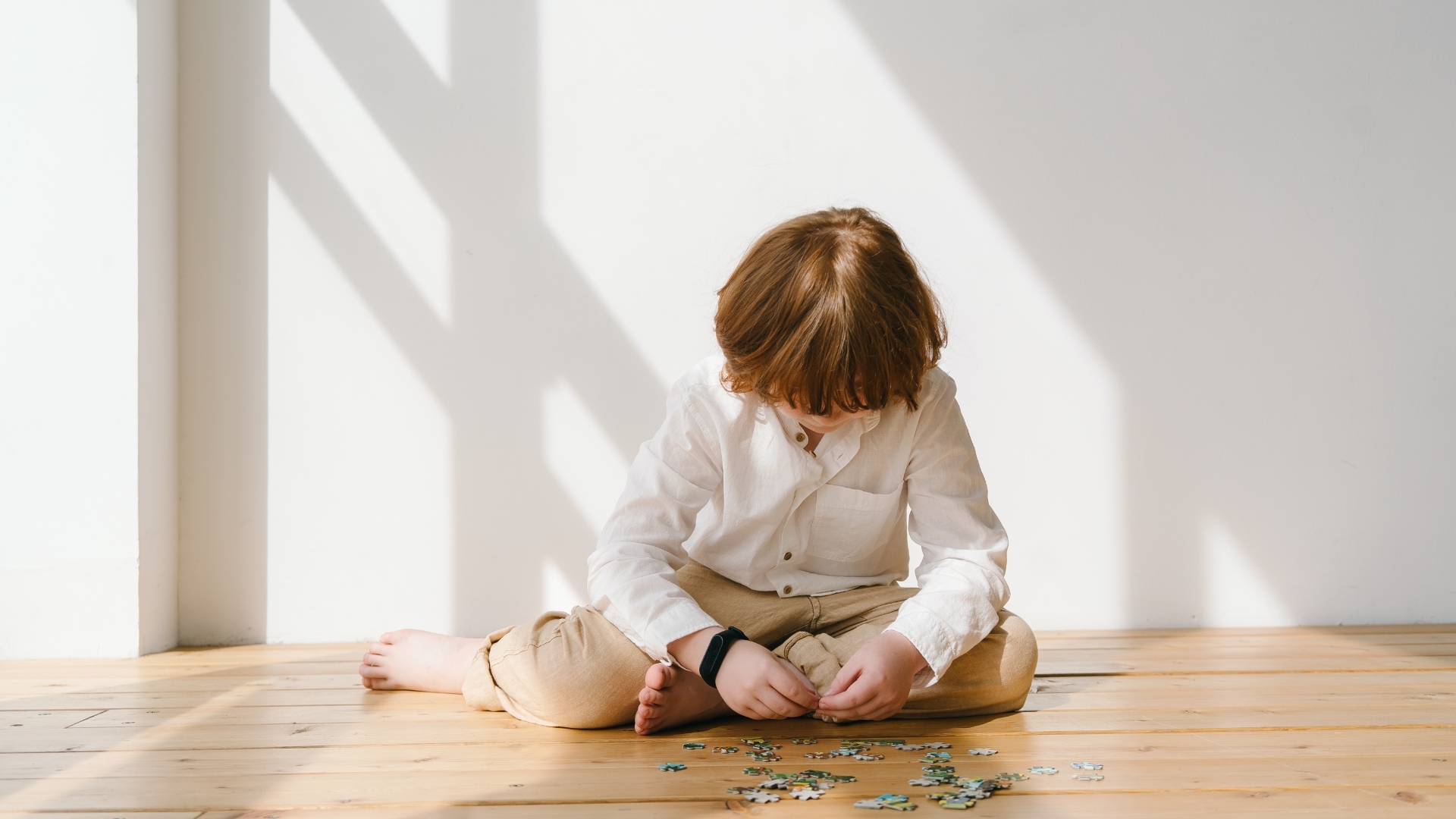
Ο autism is a neurodevelopmental disorder, a severe neurological variation in brain development and function.
This difference in brain function results in some areas of development falling behind while others remain unscathed. Extra-verbal and verbal communication and socialisation are usually impaired.
These individuals also display stereotypes and limited interests as well as sensory deviations.
Since 2013 we now refer to the autism spectrum disorder or autistic spectrum disorder based on the American Psychiatric Association DSM 5 precisely because it is a disorder that encompasses a wide range of potential, functioning and behaviours.
People with autism can have special abilities/skills on the one hand and on the other hand have significant difficulties in interacting with people or regulating their behaviour and emotions.
We are therefore talking about autism spectrum in that there are people with very limited autonomous needs to people with ongoing support needs and extremely significant developmental deficits.
Types of autism

Many people think that there are different types of autism when in fact there are different types of autism. severities or genetic syndromes who have some symptoms in common with autism spectrum disorder.
The International Classification of Diseases or ICD 10 refers to the pervasive developmental disorders (f.84) and divides the most common disorders as follows:
- Autism of childhood ( f. 84.0)
- Atypical autism (f.84.1)
- Rett syndrome (f.84.2)
- Asperger's syndrome (f.84.5)
All autism spectrum disorders share some common features, but the severity of symptoms determines the functioning and prognosis of each individual.
Asperger Syndrome, Rett Syndrome, High Functioning
The asperger syndrome, which we tend to abolish as a disorder and now refer to as high-functioning autism, differs from typical autism in that there is no general delay or slowing in language development but there are deficits in reciprocal social interaction and stereotyped or repetitive interests.
They are usually people with good cognitive abilities but may have difficulty in individual social situations and are often absorbed in their own activities or talents (e.g., construction, painting, robotics, etc.).
On the other hand the Rett syndrome shows partial or complete loss of acquired hand and speech abilities. It occurs only in girls, stereotyped hand-twisting movements and significant cognitive deficit are also manifested, although social interest seems to be maintained.
Autism high functionality, involves people who usually grow up in a fairly typical way, develop relatively normally in the areas of speech, self-care and partial autonomy but may fall short in executive functions ( critical thinking, organisation, planning and processing) or higher functions of communication (discourse pragmatics or social skills).
They may, for example, lack empathy, humour, understanding of figurative language use, ability to sustain a dialogue or to theory of mind, i.e. the ability for others to have beliefs, thoughts or feelings that differ from theirs, which is a prerequisite for quality social interaction.
Mild form of autism: What it means and how it is differentiated.
The mild form of autism involves people who usually have normal intelligence and can relate in a fairly satisfactory way.
In essence, this form of autism is part of the broader autistic phenotype (ASD). These are people who may know the social rules and communication but do not always apply them.
They do not always have the flexibility in their thinking or communication, they are more “closed” people with few social contacts, or on the contrary they are hyper-social without emotional commitment. They usually operate on a specific schedule and routine because they do not like change.
They are easily misunderstood and seem to be upset by the unexpected or what is not part of their routine.
Usually they do not show particular deviations or difficulties in their development but have qualitative deficits in their socialisation or functioning.
For example, they may work in high demanding jobs but at the same time they may not be sociable people, they may be a bit more “monotonous” and rigid.
Symptoms of Autism

In children
The first symptoms usually appear at 2 to 2.5 years of age, when parents are concerned about the delay in speech development, which in some cases may be related to specific language disorder and not necessarily on the autistic spectrum, where it is often required speech therapy. The most indicative ones are below.
Warning The presence of any of the following symptoms in a child does not necessarily indicate the presence of an autistic spectrum.
-
2-5 years old :
-
- Avoiding eye contact.
- Speech delay
- It does not respond when called by name.
- Does not point with the index finger at the desired object (usually points with the palm).
- Ascetic mobility in space
- Indifference to children of the same age
- Anger outbursts when his desire is not immediately satisfied
- Limited interest in social activities.
- Lonely and monotonous game, devoid of imagination
- Stereotypical movements (tossing, pendulum movements, repetitive clapping, etc.).
- Routines/ Obsessions (game in series, specific program....
- Sensory difficulties: Many children with autism have difficulties in processing stimuli, which is why intervention through sensory integration can significantly help to regulate motor and behavioural organisation.
-
6+ years old:
-
- Difficulty in understanding social rules.
- Difficulty in understanding higher verbal functions (perceiving humour, irony, the other person's intention, etc.)
- Need for routines and intense stress if interrupted.
- Poor socialisation with children of the same age, isolation or unstable social contacts
- Specialized, limited, intense and monotonous interests (e.g., dinosaurs, mathematics, state flags, subway stops, etc.).
The above indications may be related to broader communication disorders in children, which require careful evaluation in order to make a correct differential diagnosis.
Walking on the toes
Toe walking is a common phenomenon seen in children with autism but is not an exclusive symptom of the autistic spectrum.
Research has shown that approximately 20-50% of children with autism spectrum disorder (ASD) have this habit, compared to just 5% in the general child population.
The possible reasons for this behaviour can be:
- Sensory difficulties: Many children with autism have an increased or decreased sensory register, especially in relation to proprioception (the processing of the sense of body position) and tactile sensitivity.
Some children may not be able to bear to put their whole foot on the ground or others may be regulated by the pressure applied to the toes through toeing.
- Difficulty coordinating movements (dyspraxia): Research shows that many children with autism have weakness in the musculature of the legs, which affects their coordination and leads to unusual walking patterns (Gowen & Hamilton, 2013).
- Neurological factors: Studies suggest that the changes in motor development observed in children with autism may be related to different brain connectivity and motion control (Whyatt & Craig, 2013).
Autism in Adults
Autism symptoms in adults
The symptoms of autism in adults also vary in relation to the severity and ability to adaptive skills of the person. However, we can mention some symptoms that are more commonly observed:
-
- Limited social contacts, avoid involvement in social situations with many people.
- Rigidities, repetitive routines, obsession with specific interests
- Difficulty in perceiving humour
- Interpretation of non-verbal cues
- Difficulties in planning, designing and implementing activities, attention, decision-making, self-control and regulation of behaviour and emotion, etc.
- Difficulty in interpersonal relationships: developing or maintaining friendships, romantic relationships or working with colleagues.
- Literal thinking: difficulty in understanding metaphors, irony or implied meanings.
- Need for routine: Difficulty in changing programmes and managing unexpected events
- Difficulty in expressing emotions: Reduced expressiveness, difficulty in recognising and describing emotions (alexithymia), different perception of empathy, unresponsive emotion.
Characteristics of autistic adults
The main characteristics of autistic people have to do with difficulty in interpersonal relationships, individual adaptive skills in everyday life and deviations in relation to their behaviour.
The most basic features are:
- The rigidity in thinking
- The obsessive preoccupations
- The tendency towards isolation
- The non-use of social rules
- The sensory difficulties
- The laborious communication
- Career choices that do not require special interaction with people and increased critical thinking
Symptoms in different forms of autism
There are not different forms or types of autism as we said earlier but severities and levels of functioning.
Therefore, the symptoms in the various severities relate to the level of each individual and where he has or can reach his potential.
People with autism may differ significantly from each other in terms of their skills and the ability to manage everyday life, as well as the format, combination and importance of events.
Indicatively we can say that a mild autism, can be about a person who simply doesn't have much of a sense of humour, doesn't interact with many people and prefers to stick to their own routines. Otherwise, he or she may work, have a family and function relatively satisfactorily in all areas.
At the same time another person may have ongoing support needs, not be autonomous, have limited communication and/or intellectual disability.
Dyspraxia and ADHD in Autism
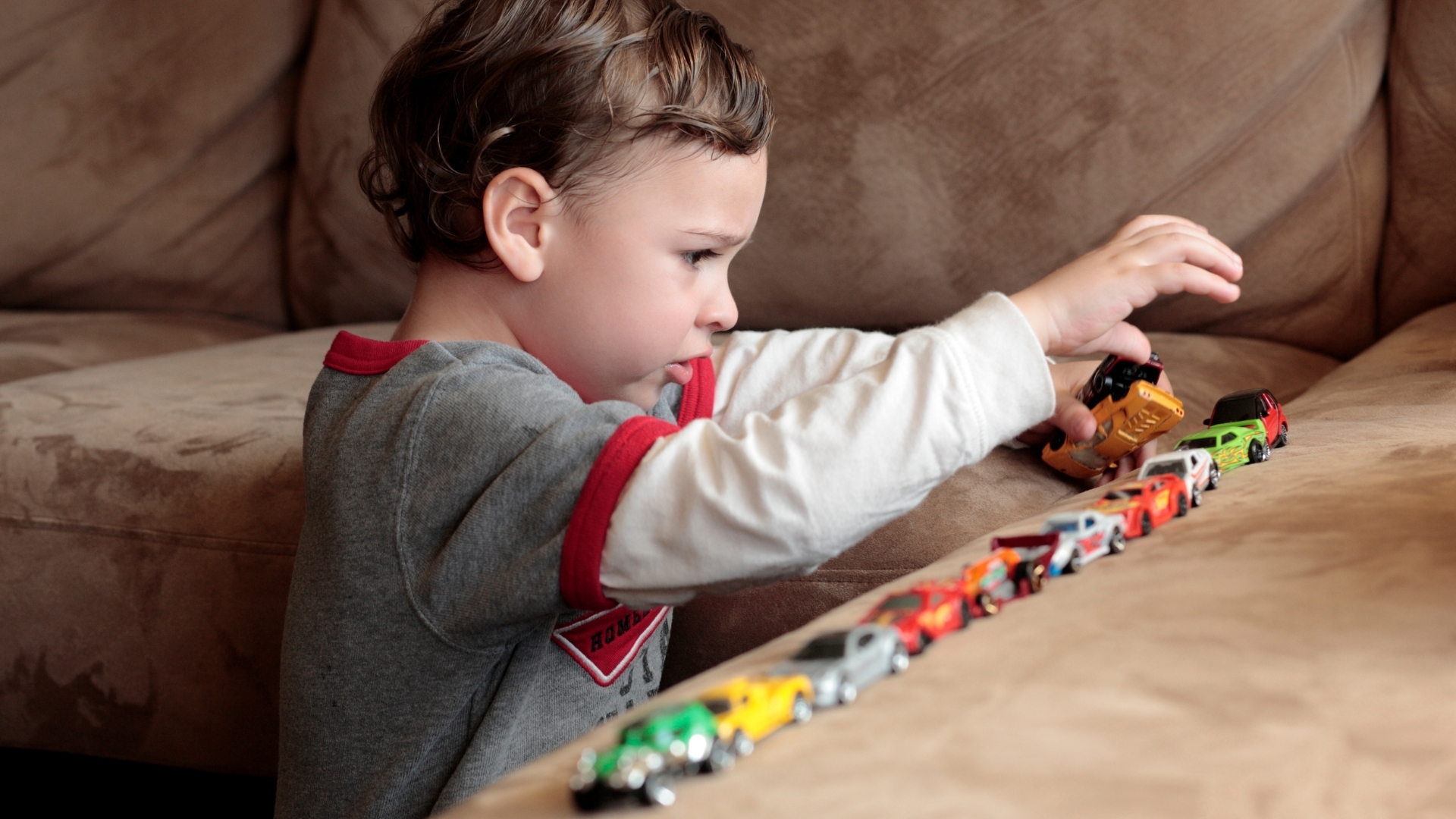
Dyspraxia and Autism
Dyspraxia is a disorder that affects motor coordination, which is often found in people with autism. Children may have clumsiness movements, difficulty in writing, activities of daily living and sports activities.
Although dyspraxia is not an exclusive feature of autism, the two often coexist. A study published in the journal Pediatrics in 2009 by Green et al. reported that approximately 79% of children with autism have significant motor difficulties, which include features of dyspraxia.
ADHD and Autism
Very often autism coexists with ADHD (attention deficit hyperactivity disorder).
Children on the autistic spectrum often find it difficult to concentrate and carry out commands precisely because they become “immersed” and fixated on their own preoccupations.
At the same time, some of them show hyperactivity of sensory type and some of them move aimlessly in space. This hyperactivity manifests itself due to the intense searching that the environment causes them. They are constantly looking for a change of stimuli, which is often the case in children with ADHD.
However, there are important differences between the two specific disorders.
Differences and common features
| PPP-Y | AUTISM |
| Hyperactivity | Unnecessary mobility in space |
| Difficulty focusing attention | Attachment to objects and routines |
| Qualitative interaction with individuals | Poor interaction with people |
| Glimpsed or qualitative eye contact | Fleeting or absence of eye contact |
| Good symbolic game | Stereotypical game |
| Easy transitions to changes | Difficulty in transitions |
| Regulated emotion | Anger outbursts |
| Reciprocity | Isolation |
| They need program | They seek routines |
| Relaxation of association | Echolalia |
| Fast switching of activities | Stereotypes |
Causes of Autism
The causes of autism are not yet fully understood so that we can prevent it from developing.
But there is no doubt that this is a multifactorial disorder, in the occurrence of which there are genetic and environmental factors.
The term “genetic factors” means the increased likelihood of an organism developing a disease depending on the genetic information it carries.
It generally results from the hereditary factors one or both parents.
Environmental factors associated with the onset of autism, in the sense that they are more frequently observed in people with autism compared to people without, are:
- the advanced age of the parents
- maternal exposure during pregnancy to certain drugs or chemicals (e.g. alcohol)
- the prematurity
- metabolic diseases of the mother, such as: diabetes mellitus, hypothyroidism, vitamin D deficiency, etc.
- low birth weight,
- the birth of a previous child with autism in the family
Factors in pregnancy or childbirth
Various perinatal events are also reported such as:
- hip projection
- low Apgar score at 5 minutes after birth;,
- infections during pregnancy or immediately after birth, such as rubella, toxoplasmosis, megacythalovirus-CMV infection
Diagnosis of Autism
The diagnosis is given exclusively by medical specialists child psychiatrists, developmental or paediatric neurologists, however the child psychiatrist is the person responsible for the comprehensive assessment of the child and the family.
ADOS-2, ADI-R, CARS, BEALEY test, M CHAT, Q CHAT, are some of the tests that help to complete the diagnosis of autism.
Η diagnosis in adults most of the time has been given by the childhood. However, some high-functioners may have gone undiagnosed because they have features that needed further investigation or differential diagnosis that were never properly screened for.
Some tests circulating on the internet are not reliable in diagnosing autism in adults. The AQ Autism spectrum helps with some important clues but the diagnosis can only be made by a psychiatrist.
Questionnaires and diagnostic criteria
M-CHAT and ACHENBACH are two questionnaires that contribute to the diagnostic criteria in the sense that they help to complete the picture we have of the child by having all the necessary information from his/her environment.
However, the diagnostic criteria based on the American classification DSM V and the International Classification of Diseases ICD 10 are more appropriate to be more correctly and formally diagnosed by medical specialists.
It is appropriate the diagnosis be carried out in the context of a multidisciplinary team composed of scientists from various disciplines, so that the needs and skills of the individual are assessed comprehensively and specifically, which will guide the design of a personalised intervention programme.
Treatment and Management of Autism

Daily Management
How to calm a child with autism
- Keep as much as possible routine in his daily life.
- Hold it in a tight hug and put pressure on its back in case temper tantrum.
- Create a visualisation programme that will facilitate preparation for events and new experiences.
- Isolate it in a familiar quiet place
- Adjust the lights in the room when possible and the volume of ambient sounds (e.g. TV, music, electrical appliances, open windows)
- Prepare it before it is exposed to a new environment with either pictures or social stories
- Let him hold familiar objects with textures he prefers
- Make bubbles or anything else that gives him pleasure
- Speak with a few words and a calm tone of voice.
- Remove an object that disrupts or causes discomfort
- Observe what causes tension and avoid contact without special preparation
- Shape the environment and mimic its behaviour when it is euphoric.
- Consult the occupational therapist for possible sensory diet
The implementation of the above strategies is most effective when parents receive guidance through parent counselling, in order to understand the child's needs in depth and to adapt their attitude and environment appropriately.
Activities and tools for children on the autism spectrum
Some activities that help children on the autism spectrum include swimming, therapeutic horseback riding, music therapy, children's yoga and creative activities aimed at socialisation.
At the same time, any activity that enhances interaction with children of the same age and contact with nature is very positive.
Tools such as the reward board or boards with pictures and symbols (“wait”, “help”, “stop”, “start”, etc.) are extremely helpful in controlling behaviour.
Sensory toys and tools such as light balls, sound balls, plasticines, sensory bottles, sandpaper, sticky textures and orofacial tools help to regulate and better respond to play.
Social stories are often necessary because they enhance organisation and help in understanding social situations, regulating behaviour and emotion.
Therapeutic Approaches

Educational Programmes
The educational programmes special education that work effectively are
1.The alternative communication programmes:
The most common are the “PECS”, or “MAKATON”, to “go talk now”, programmes that include pictures and symbols to enhance communication.
2. The programmes of methods of organisation and intensive interaction:
The TEACCH works as an organisational, programme, framework and routine tool using visualised material and activities with a clear start and end.
The sensitive interaction (intensive interaction) aims to interact exclusively with faces, following the child's behaviour through imitation and physical play, withdrawing objects from the space.
- The method sensory integration (sensory integration) is increasingly used as it targets sensory regulation that is often disorganised and impairs children's functioning.
- The Social Stories (social stories) seek to prepare a social situation where the child follows step-by-step recommendations that serve appropriate communication.
All are based on facilitating the person with autism by enhancing interaction that is not spontaneously sought and regulating behaviour and emotion.
Specialised material and support
Children with autism need a therapy programme with specialised material that each therapist adapts according to their needs.
Assistive technology, coded images, symbols and sensory material form the basis of personalised intervention.
What is the life expectancy for people with autism?;
According to a study published in the British Journal of Psychiatry people with autism die on average 16 years earlier than the general population.
The research was carried out in Sweden and found that people with autism who also had a learning disability lost their lives over 30 years earlier than the general population with an average age of death of 39 years.
While there are seemingly no clear organic causes, lifestyle, food habits, sleep disorders and reduced exercise increase the chances of cardiovascular disease. Reduced social interaction can also affect and further exacerbate mental health problems by interfering with self-care, education and employment.
Conclusion
Ο autism is a disorder that includes a wide range of difficulties and deficits. However, people with autism have many gifts and skills that are unique and admirable.
Support for people with autism is determined by understanding the symptoms and adapting our behaviour to them.
Because they cannot spontaneously communicate and socialise we need to modify the environment and decode their behaviour. Only then will we be able to connect with them and improve the quality of life their.
The timely diagnosis and the early intervention helps to get a better prognosis. The earlier the difficulties that impair communication and socialisation are recognised, the sooner the specialist will be able to facilitate the child and family to interact satisfactorily with each other. At the same time, it will be quicker to achieve social and school integration.
The child's supportive environment should consist of experts that are concerned, From teachers that interested and by Parents that listenerι...