
What is Cerebral Palsy?
Cerebral palsy is a general term used to describe a group of permanent disorders affecting posture and movement, which cause motor dysfunction and limit the ability to carry out activities.
They are caused by a non-progressive lesion in the developing brain. Their main characteristic is motor impairment and reduced functionality.
Apart from physical disability, the Cerebral Palsy It is often accompanied by problems with sight or hearing, difficulties with perception, learning and communication, behavioural disorders, epileptic seizures or musculoskeletal problems. The co-occurrence of these difficulties can have a significant impact on the child's development and quality of life.
Cerebral palsy is one of the most common causes of physical disability in children and, according to surveys It occurs in 2 to 3 children per 1,000 births.
The severity of the disorder ranges from mild motor difficulties, with these children being able to walk and look after themselves without much assistance, to complete dependence and immobility, where these children require constant support.
The causes of cerebral palsy are classified according to the stage of development at which the damage occurred. During pregnancy, these may include congenital brain injuries, such as arteriovenous malformations and intrauterine infections. During labour, causes may include perinatal asphyxia, cerebral hypoxia (which is the most common cause of cerebral palsy), infections of the central nervous system, and birth trauma. Finally, after birth, causes include neonatal kernicterus, meningitis, encephalitis and traumatic brain injuries.
Symptoms of Cerebral Palsy
The cerebral palsy It affects the development of the neurological mechanisms responsible for posture, balance and coordination of movement. As a result, children experience difficulties in controlling their muscles, which often function in an abnormal manner.
At the same time, certain neonatal reflexes persist for longer than normal, and the transition from one stage of development to the next is slower.
Although the brain damage that causes cerebral palsy is permanent, it is not progressive. This means that the damage does not get worse over time, whilst, with appropriate therapeutic intervention and rehabilitation, the child's motor skills and functionality can be improved, thanks to the brain's plasticity.
As well as mobility difficulties, cerebral palsy may be accompanied by problems with sight and hearing, and difficulties in speech and speech, as well as perceptual disorders. In some cases, these co-occur with epileptic seizures, cognitive difficulties or behavioural problems. These additional difficulties often affect the child's learning process, as well as their communication and social interaction.
Types of Cerebral Palsy
Cerebral palsy is classified on the basis of two key criteria: the parts of the body that are affected and the type of motor impairment the person has.
As regards affected members, cerebral palsy is classified as hemiplegia, diplegia, quadriplegia and monoplegia.
At hemiplegia the body and limbs on one side are affected, on the paralysis It mainly affects the lower limbs, in the quadriplegia All the limbs are affected equally, as is the body, and in the monoplegia which is rare; usually only one limb is affected.
Depending on the type of motor dysfunction, cerebral palsy is classified as spastic, athetoid, ataxic, dystonic and mixed (spastic and athetoid) palsy.
Spastic paraplegia
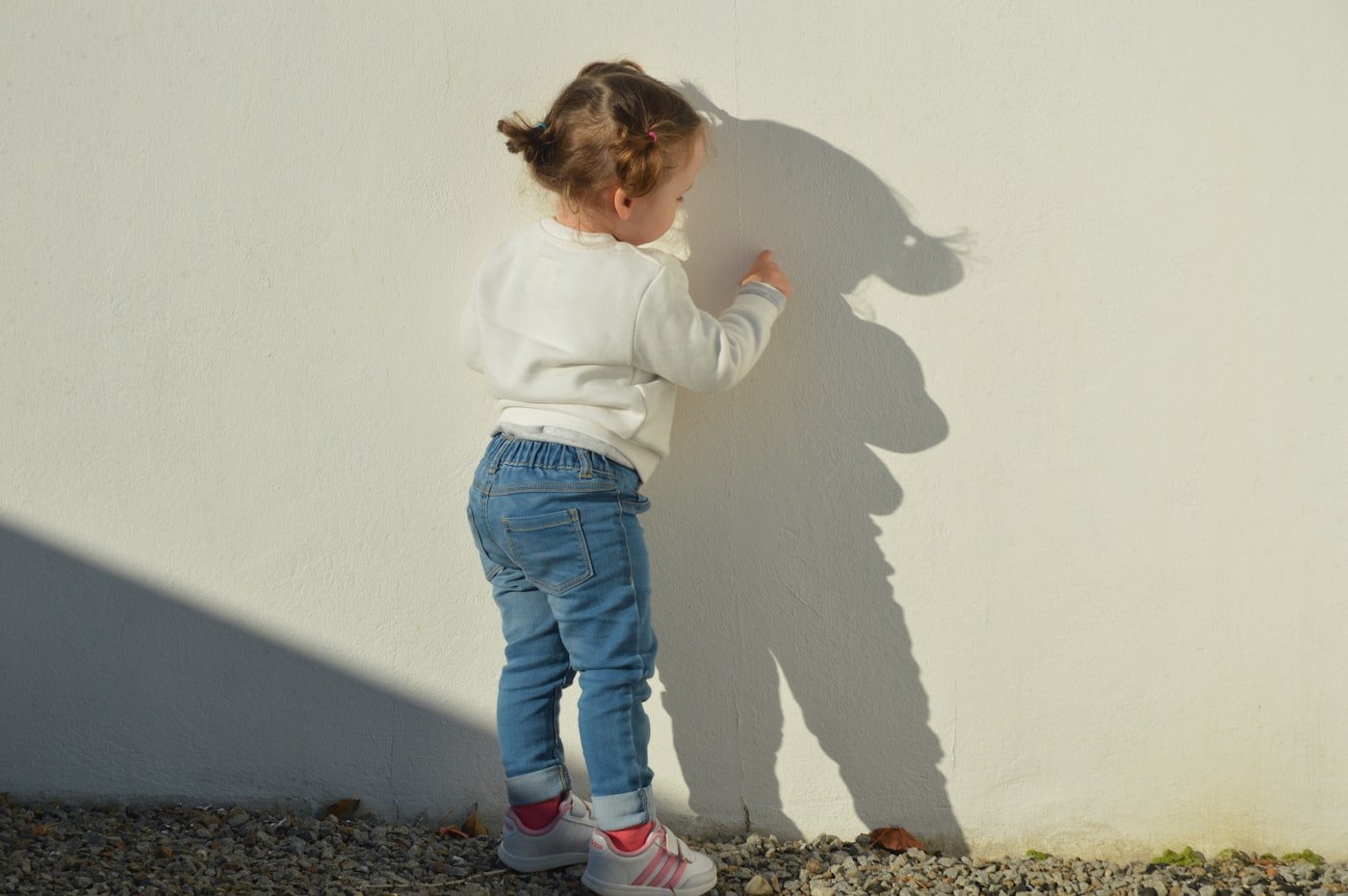
The spastic diplegia It is a common form of cerebral palsy, which mainly affects the lower limbs. Children experience increased muscle tone and stiffness in their legs, whilst their arms are usually affected to a lesser extent or not at all.
Depending on the severity of the condition, children may have difficulty walking, maintaining their balance and with their overall mobility. Many children with spastic diplegia walk on the balls of their feet or exhibit a characteristic "scissor" gait due to spasticity in the adductor muscles. In other cases, the hips and knees remain bent whilst walking, and weight-bearing is mainly on the balls of the feet.
Physiotherapy, particularly when started early, can be of significant help. Its aim is to improve mobility, reduce stiffness, improve balance and help the child achieve as much independence as possible in their daily activities.
Quadriplegia
Quadriplegia is one of the most severe forms of cerebral palsy, as it affects all four limbs. Children with quadriplegia find it difficult to control their movements, maintain correct posture and keep their balance.
The most common form of quadriplegia is spastic quadriplegia, which is characterised by severe muscle stiffness and increased muscle tone throughout the body, usually meaning that the child needs assistance with most of their daily activities.
Of course, the situation is not the same for all children. When spasticity is milder and is managed appropriately, many children can develop better motor skills. Some manage to walk with the aid of walking aids, whilst others get about independently using a wheelchair.
In the most severe forms, independent mobility, the use of the hands, eating or personal care, as well as speech, swallowing and breathing, due to the strain placed on the muscles of the face and trunk. For this reason, the collaboration of a multidisciplinary team comprising doctors, physiotherapists, speech therapists, occupational therapists.
Hemiplegia
At hemiplegia One side of the body is affected, namely the arm and leg on either the right or left side. Children may experience muscle weakness or increased muscle tone (spasticity), whilst they may also show reduced coordination in the movements of the affected side.
In hemiplegia, children rely more on their healthy arm, whilst the affected upper limb is used less in everyday activities. At the same time, spasticity in the lower limb can affect gait and balance, making walking more difficult.
Nevertheless, many children with hemiplegia can achieve a very good level of functional ability through appropriate treatment. Physiotherapy, the occupational therapy and various aids, such as splints, play a significant role in improving strength, coordination and the use of the affected side in everyday life.
Breach
The non-compliance It is a form of dyskinetic cerebral palsy and is characterised by slow, involuntary and uncontrolled movements. These movements may occur in the arms, legs, trunk or facial muscles and often make it difficult to carry out even simple everyday activities.
Unlike spastic cerebral palsy, where muscle tone is consistently elevated, in athetosis muscle tone fluctuates constantly. It may increase or decrease during movement or even when the child is at rest, which makes it difficult to control movements and maintain a stable posture.
Involuntary movements usually become more pronounced when the child is trying to perform a voluntary movement or when they are feeling anxious or emotionally distressed.
In some cases, choreoathetosis occurs, which is a combination of slow, twisting movements with faster, irregular involuntary movements. Children with athetoid cerebral palsy may experience difficulties in maintaining balance, with fine motor skills, as well as with speech and feeding, when the muscles of the face and mouth are affected.
Ataxia and Cerebellar Ataxia
The cerebral palsy It is a rarer form of cerebral palsy, which primarily affects coordination of movement, balance and control of body posture. The symptoms are caused by damage to the cerebellum or its neural connections, a part of the brain that plays a key role in coordinating movement.
Children with ataxic cerebral palsy usually have an unsteady gait with a wide base of support, as they are constantly trying to maintain their balance. Their movements may be clumsy and less precise, which makes activities such as writing, using objects or getting dressed difficult. In some cases, tremor occurs whilst performing a movement (intentional tremor), whilst there may be difficulty in controlling posture and fine motor skills.
Although the ataxic form is less common than other types of cerebral palsy, it can significantly affect a child's day-to-day functioning. Early intervention, in collaboration with physiotherapists, occupational therapists and other healthcare professionals, helps to improve balance, coordination and independence in everyday activities.
Friedreich's ataxia
The Friedreich's ataxia It is a rare, hereditary neurodegenerative disorder that gradually affects the nervous system. It usually appears in childhood or adolescence and causes progressive difficulties with coordination, balance and walking.
In the early stages, children or adolescents usually experience unsteadiness when walking, fatigue and reduced coordination of the upper and lower limbs. As the disease progresses, muscle weakness, spinal deformities such as scoliosis, and foot deformities may develop. Furthermore, many patients develop cardiac complications, primarily hypertrophic cardiomyopathy, whilst in some cases other problems may also arise.
Although there is currently no definitive cure, early diagnosis and regular monitoring can help to manage the symptoms more effectively. Physiotherapy, combined with appropriate medical care and other supportive interventions, helps to maintain mobility, functional independence and quality of life for people with Friedreich's ataxia.
Diagnosis of Cerebral Palsy
The diagnosis of cerebral palsy is based primarily on a detailed clinical and neurological assessment of the child. The paediatric neurologist examines the child's motor development, muscle tone, reflexes, balance, posture, range of motion in the joints and coordination of movements. At the same time, the child's developmental history is assessed, such as the age at which they were able to sit, crawl or walk, as well as any problems that arose during pregnancy, childbirth or the neonatal period.
Imaging tests are often used to confirm the diagnosis and investigate the cause of the lesion, the most important of which is a brain magnetic resonance imaging scan (MRI), which can reveal lesions or developmental abnormalities in the brain. Where necessary, the doctor may also recommend further tests, such as genetic or metabolic screening, to rule out other conditions with similar symptoms.
Early recognition of the first signs is particularly important. Delays in reaching motor milestones, unusual stiffness or flaccidity of the muscles, difficulty controlling movements or persistent asymmetry in body movements are signs that should be assessed by a specialist.
The child's diagnosis and monitoring are carried out primarily by a paediatric neurologist and a multidisciplinary team, comprising physiotherapists, occupational therapists, speech and language therapists and other healthcare professionals. Collaboration between all these disciplines helps to ensure the timely development of a personalised intervention programme, tailored to the needs of each child.
Treatment and Rehabilitation
Physiotherapy
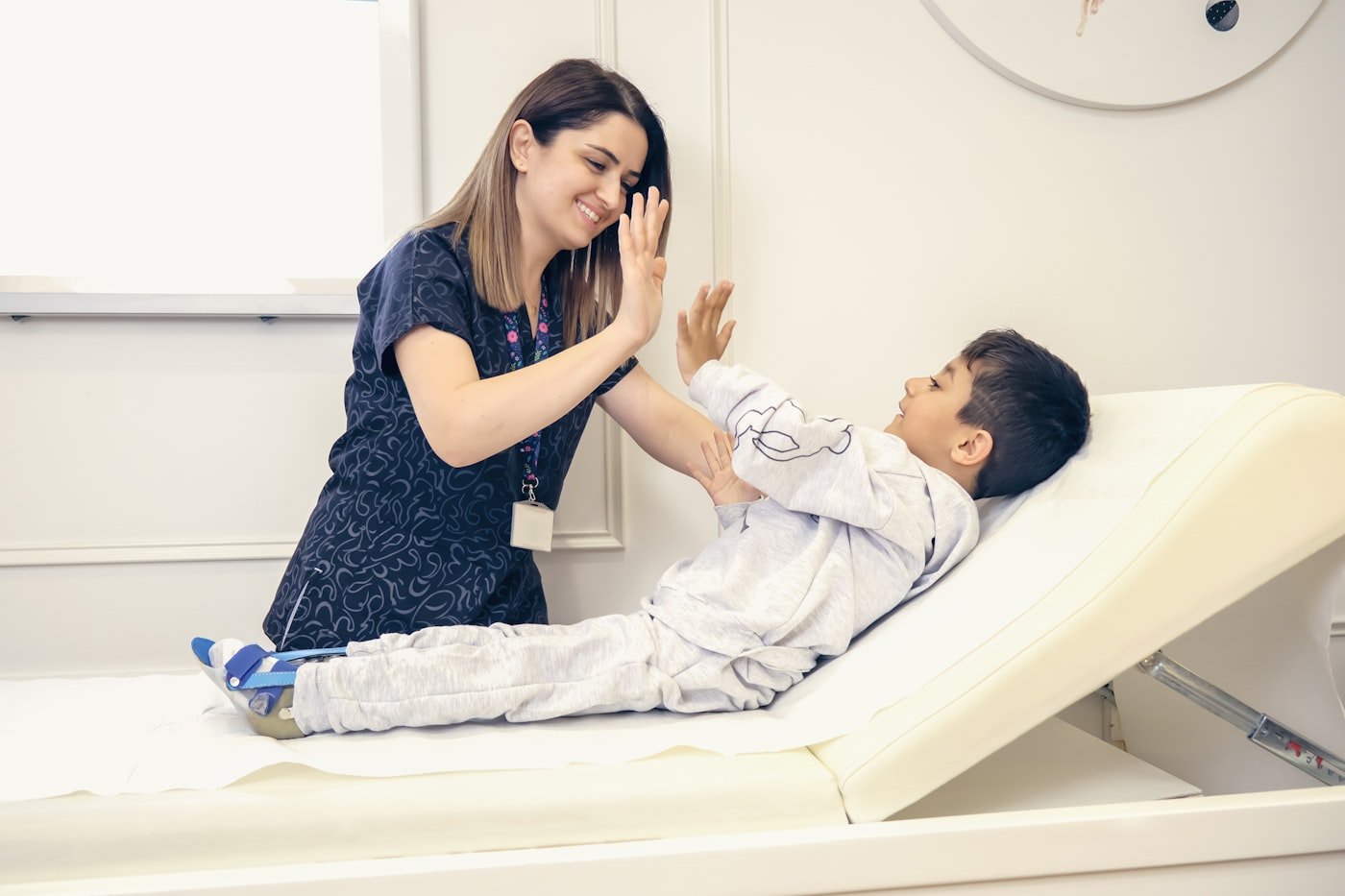
The physiotherapy It is the cornerstone of rehabilitation for children with cerebral palsy, as it helps to improve mobility, balance, muscle strength and overall functionality. Its main aim is to help the child make the most of their potential and achieve as much independence as possible in their daily activities.
As every child has different needs and a different level of motor function, the treatment programme is tailored to the individual.
The physiotherapist assesses the child's movement patterns, muscle tone, range of motion in the joints, balance, coordination and functional skills. Frequent reassessment of their progress allows the treatment to be adapted to meet their needs at every stage.
Physiotherapy involves exercises designed to maintain or improve the range of motion in the joints, alleviating muscle stiffness, strengthening muscles and improving balance and motor coordination.
At the same time, through practical activities and therapeutic play, the child practises skills that are essential for their everyday life.
The rehabilitation programme may include walking exercises, weight-bearing exercises, practising moving from one position to another, stretching, strengthening exercises, functional activities and joint-loading exercises.
Where necessary, aids are used to facilitate movement and support correct posture. Timely and systematic intervention can significantly improve the child's functionality, independence and participation in family, school and social settings.
In modern paediatric rehabilitation, various therapeutic approaches are used, which are selected according to the needs and goals of each child. One of the most widely used is the approach Bobath or Neurodevelopmental Treatment (NDT). This approach aims to improve motor control and the quality of movement, through specialised therapeutic techniques and functional activities that encourage the child to develop more effective motor strategies and acquire an appropriate motor pattern.
Another modern therapeutic approach is the Dynamic Movement Intervention (DMI), which is based on the child's active participation and on eliciting motor responses through dynamic activities carried out mainly against gravity. The aim is to improve postural control, balance and the development of new motor skills.
Particular emphasis is also placed on functional training, during which the child practises activities of daily living, such as moving from one place to another, walking, climbing stairs and playing. In this way, the motor skills acquired during therapy can be applied to everyday life, enhancing the child's independence and participation.
Special aids also play an important role in rehabilitation. Splints help to stabilise the joints, improve posture and enable more effective walking, whilst standing frames facilitate a safe standing position and weight-bearing on the lower limbs. Furthermore, walking frames, wheelchairs, specialised seating and assisted walking systems can significantly enhance a child's mobility, safety and functional independence.
Occupational therapy
Improving daily activities; Child's independence
Occupational therapy plays an important role in the rehabilitation of children with cerebral palsy, as it helps them to become more independent in their daily activities. Its aim is not only to improve specific skills, but above all to enhance the child's participation in activities such as play, school, self-care and social interaction.
Any occupational therapy programme προσαρμόζεται στις ανάγκες και τις δυνατότητες του κάθε παιδιού. Αρχικά, ο εργοθεραπευτής αξιολογεί τον συντονισμό των κινήσεων, τη λειτουργία των άνω άκρων και τον τρόπο με τον οποίο το παιδί εκτελεί καθημερινές δραστηριότητες, όπως το ντύσιμο, η σίτιση, η προσωπική φροντίδα και η χρήση σχολικών αντικειμένων. Με βάση αυτή την αξιολόγηση, σχεδιάζεται ένα εξατομικευμένο πρόγραμμα παρέμβασης.
The therapy involves activities that help the child improve their coordination, strength, range and control of movement, as well as the use of their hands in everyday activities, with the aim of promoting their independence.
In some cases, children find it difficult to process environmental stimuli, such as touch, movement or body position, correctly. Through appropriate activities sensory processing, occupational therapy can help the child respond better to these stimuli and take part more easily in their daily activities.
Where necessary, aids are used or adjustments are made to the child's environment, such as splints, special seats, writing aids or adapted feeding utensils, to facilitate their self-care and participation at home and at school.
At the same time, the occupational therapist works closely with parents and teachers, providing them with practical guidance that they can apply in everyday life to help the child achieve maximum independence.
Speech therapy
Many children with cerebral palsy experience difficulties in contact, which may be attributable to a combination of motor, sensory and cognitive factors.
These difficulties vary significantly from child to child. Some children have mild difficulties with articulation or speech, whilst others have severe communication disorders and are unable to use speech effectively. It is estimated that approximately 20 per cent of children with cerebral palsy They are non-verbal and require alternative means of communication.
Speech and language therapy is tailored to each child's needs and is primarily aimed at developing their communication skills and facilitating their participation in everyday life.
In some cases, systems may be used Augmentative and Alternative Communication (Augmentative and Alternative Communication, AAC), such as communication boards or electronic devices (e.g. tablets), which enable the child to express needs, wishes and emotions and to communicate more effectively with those around them.
In addition to communication difficulties, many children with cerebral palsy also experience feeding and swallowing difficulties (dysphagia). According to recent studies, the dysphagia It can affect up to 85 per cent of children with cerebral palsy and is often associated with reduced food intake, feeding difficulties and an increased risk of respiratory complications, and its severity is often linked to the extent of the child's motor and cognitive difficulties. For this reason, managing the condition requires collaboration between various healthcare professionals to assess not only the child's motor and respiratory functions but also their nutritional needs.
The speech and language therapist plays a crucial role in the assessment and rehabilitation of feeding and swallowing disorders. They first assess feeding function and identify potential risk factors, and then design a personalised intervention programme.
The treatment may include activities to improve communication skills, exercises to improve oral-facial coordination, sensory-motor techniques, training in correct articulation, correct body posture during feeding, adapting the texture of foods and liquids, as well as training for parents and carers.
Life Expectancy and Quality of Life
Life expectancy for people with cerebral palsy It depends on many factors, such as the severity of the motor dysfunction and the presence of associated health problems. Difficulties with breathing, feeding, severe dysphagia or significant epileptic seizures may adversely affect the prognosis. Conversely, many people with mild or moderate cerebral palsy have a normal or near-normal life expectancy and can enjoy a good quality of life well into old age.
The timely diagnosis and the start of rehabilitation play a crucial role in the child's development. The collaboration of a multidisciplinary team, comprising paediatric neurologists, physiotherapists, occupational therapists, speech and language therapists and other healthcare professionals, helps to improve mobility, communication, self-care and participation in activities of daily living.
In recent years, progress in therapeutic interventions, The use of modern aids and improved medical care have significantly improved the quality of life for people with cerebral palsy.
With the appropriate support from their family, healthcare professionals and the educational environment, many children grow up to become adults who actively participate in education, work and social life, achieving a high level of independence.
Conclusion
Cerebral palsy is a non-progressive neurological disorder that primarily affects movement and posture, whilst in many cases it may be accompanied by difficulties with communication, speech, learning, feeding or other associated disorders. Although the clinical presentation varies significantly from child to child, early diagnosis and a comprehensive assessment are essential for appropriate management.
Rehabilitation, through the collaboration of physiotherapists, occupational therapists, speech and language therapists, doctors and the family, can make a significant contribution to improving the child's mobility, functionality and independence.
At the same time, ongoing support and personalised therapeutic intervention help the child to develop their skills and participate as actively as possible in daily, school and social life.
With the appropriate support, many children go on to become adults who study, work, form social relationships and play an active role in the community. For this reason, the early identification of the first signs of motor delay and immediate referral to a specialist multidisciplinary team are crucial steps towards maximising every child's development and quality of life.